What is Linux?
Linux is a family of open-source operating systems that use the Linux kernel. it’s creator Linus Torvalds, first released the system in 1991.
Linux comes in a variety of flavors typically known as distributions, which are provided by variety of vendors with the most popular distributions being “Debian”, “Fedora”, and “Ubuntu”; Other prominent distributions mostly used in productions are “Red Hat Enterprise” and “SUSE Enterprise Server”.
Distributions intended for servers follow the stack solution LAMP ( Linux, Apache, MySQL, PHP/Perl/Python ). The stack solution is a very common example of a web service stack of services and all the services included are Open-Source, its worth noting that nowadays the LAMP stack may vary with the services being used however the model which it follows remains the same.
Different Linux desktop distributions also offer a variety of desktop environments each with its distinct characteristics from GNOME or KDE Plasma to environments that assist users with disabilities including Vinux which main features include Speech and Magnification, as well as Talking Arch which incorporate speech and braille for the visually impaired. You can check this out in this website.
https://opensource.com/life/15/8/accessibility-linux-blind-disabled
Linux Distributions cater to a wide variety of different customers and their needs even including the popular Penetration Testing distribution Kali Linux, which comes pre-loaded with all the necessary tools and libraries you need to conduct a PenTest.
Linux Runs the world!
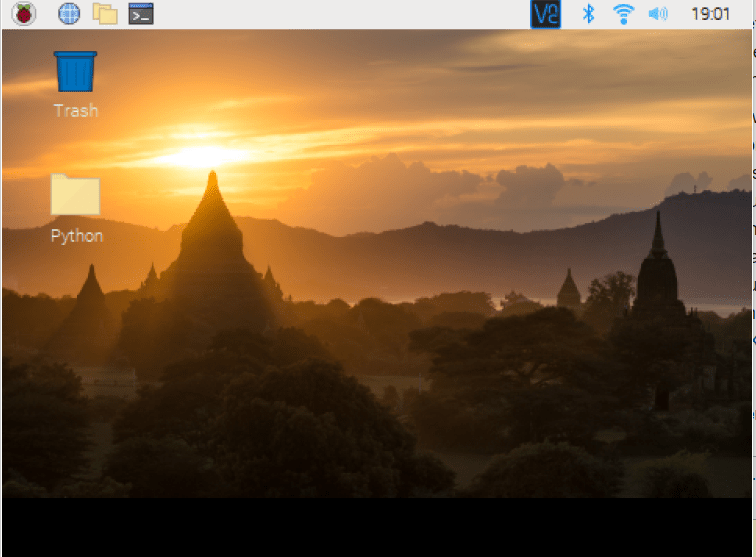
One of the main reasons to consider Linux as your OS is the simple fact that it is everywhere! and the distributions are very portable and lightweight, you can have a Linux box installed in a simple and cost efficient raspberry pi in a matter of minutes, or you can install the user friendly Raspbian which can be installed on a 16gb sd card in your Pi. (not the prettiest version, but it will do)
You may think devices running on Windows or MacOS are what people often use and are the most popular ones, and you would be right to certain degree (By the way, MacOS uses a form of UNIX in it).
However, when it comes to Linux? it is used to run virtually everything! from android devices, smart home and IoT, Tesla vehicles, Mercedes-Benz, video games, smartwatches, avionics, Cloud Computing… the list goes on! all of these rely on the power of Linux and the beauty of Linux being open-source is that the source code may be modified or distributed by anyone under the terms of its license. Not to mention the ability to fully modify your version to your specifications.
Linux Learning Curve
Many users do not like Linux mostly because of its complex command syntax, at least in my opinion I find them quite complex.
But the key to learning how to use it properly and take advantage of the CLI power is practice, as we stated before it is an Open-Source OS which more often that now comes with its own community forum that are there to guide you on how to use it.
Some of the most basic commands are:
ls – shows a list of items in the directory(folder)
cd – change directory (move from folder to folder)
rm – remove (delete)
alias – assigns an alias to a command (very useful)
cat – short for concatenate used in a variety of ways (mostly to view readable files)
echo – prints a string passed as an argument
exit – closes the shell
find – one of the most useful commands to find the location of a file.
whoami – will show you the username(hostname) currently in session.
These are but a few basic commands you can use in Linux to help you get started in the OS CLI.
the beauty of Linux is if you do something that causes an issue on your computer or creates what is called a Kernel Panic, most likely out there, there is a way to solve it rather easily.
The ability to modify everything in the OS is what gives Linux an advantage over its competitors contrary to other OS’ where they restrict the user certain actions that may harm the system, Linux allows you to freely change what you will, by the same token in the case that you do mess something up, you will have to know a way to fix it.
Conclusion
Learning how to operate Linux is a crucial part of any I.T professional.
The many distributions of Linux are used in all type of devices and production environments mostly because of its portability and the ability to modify the OS to suite your needs.
Learning how to use it can be a bit complex and unfamiliar at first but once you get the hang of it can easily become something of a second nature; Practice commands and play with them to get a feel for it, google projects and replicate them on your device, break it, fix it and then break it again.
Linux is a valuable tool to have handy in your IT career toolkit.
 Welcome to Tech101s